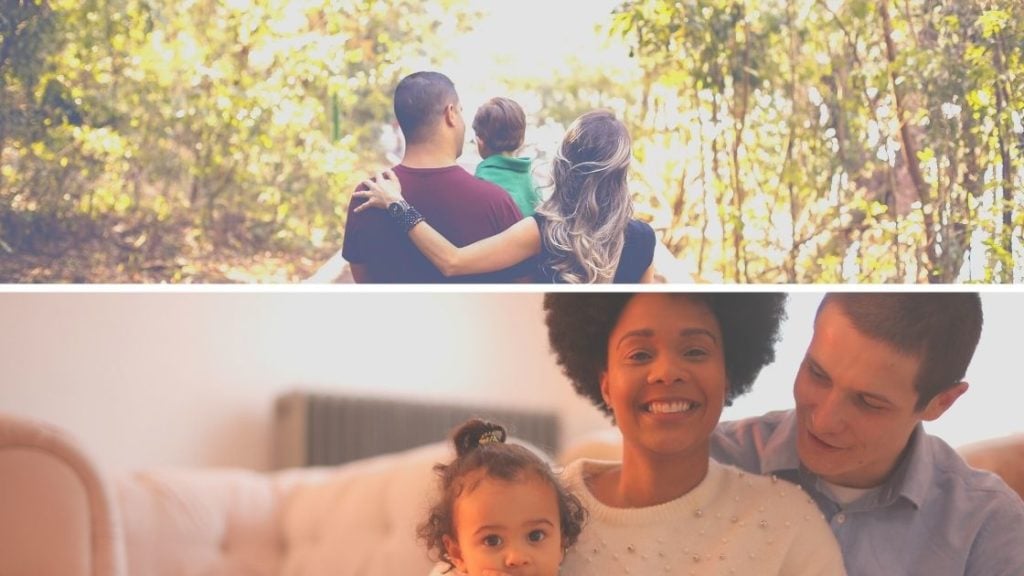
When 3-year-old Andrew and his father walk through the doors of the Minnesota Valley YMCA, they aren’t there to lift weights, but to meet up with Andrew’s daycare providers – his grandparents, Janyce and Virgil Israelson – who have finished their workouts and will care for Andrew in their Minneapolis home.
Three days a week, Sandi and Randy Clough drive to Minneapolis to pick up their 2-and-a-half year old granddaughter, Gwen. Back home in Burnsville, their day together begins with breakfast, then moves on to puzzles, blocks, and books. The three of them exercise and take field trips – the grocery store is a favorite for Gwen. Gwen goes to day care two days a week at the home of a professional provider, a friend of the family. As kindergarten approaches, preschool will take the place of this secondary arrangement.
Of Minnesota families using childcare, 46 percent use care provided by families, friends, and neighbors (known as “FFN” care), according to a statewide survey conducted by the Wilder Foundation for the Minnesota Department of Human Service and released last year. That’s more than 150,000 households. Over half of the caregivers are grandparents – mostly grandmothers, in fact – like the Cloughs and Israelsons, who bear out the report’s observations that FFN caregivers understand the importance of their role and participate in their grandchildren’s health, safety, and school readiness. The report recommended recognizing, supporting, and building on those strengths.
Mixing ‘school’ and Grandma’s house
Why assume the demanding, often exhausting, role of caregiver to a young child? Israelson, a retired elementary school teacher, was a working parent and feels privileged to carry on the family “legacy,” begun by her own mother who provided care for Israelson’s daughter.
The Wilder report also found that more than a third of working households had lost time at work or income due to a child care problem in the six months prior to the survey – a situation from which Israelson hopes to safeguard her daughter.
Originally, Andrew spent five days a week with his grandparents. Now he spends three of those days at a neighborhood day care center. (Most families, in fact, have two arrangements.) “School,” as Andrew calls day care, was a smooth transition.
Israelson is amazed that what Andrew learns in “school” is similar to what was taught in kindergarten 30 years ago. She’s begun working with Andrew in preparation for kindergarten, emphasizing what he learns at day care.
Israelson was reluctant to have her grandson cared for by others but she and her daughter agree this new arrangement is ideal, providing Andrew the best of both worlds. Israelson’s eyes light up when she talks about Andrew climbing on his grandfather’s lap to give him hugs and kisses. She feels the intergenerational relationship is important but agrees it’s been good for Andrew to be among children his own age, too, as he learns social skills. “Andrew is learning the world isn’t just Andrew’s,” says his grandmother.
More services for grandparent caregivers
Richard Chase, research scientist and co-author of the Wilder study, says it is a misconception to presume family, friends, and neighbors do not provide the same quality of care as professionals, that they are simply glorified babysitters. In fact, the Wilder study found FFN providers have more education and experience than people give them credit for. The study also found 80 percent of respondents were eager or open to gaining more skills for improving the quality of their care.
In the current state legislative session, both the House and the Senate are considering a bill that would develop partnerships between FFN caregivers and community organizations to help promote school readiness. Ready 4 K, a nonprofit organization promoting kindergarten-readiness for every Minnesota child, drafted the bill.
“We assume there are many FFN caregivers who give the children in their care many opportunities for early literacy, early math, positive social-emotional and physical growth, and opportunities for creative activities,” Zoe Nicholie, Ready 4 K’s public policy director said. “However, we also assume many FFN caregivers would benefit from supports, resources, and partnerships with libraries and community resources that support the school readiness of the children in their care.”
Already in place is Early Childhood Family Education (ECFE). A program of the Minnesota Department of Education, available to parents and relatives through community education in Minnesota school districts, ECFE offers programs and services to families with children from birth to kindergarten.
Though she hasn’t taken advantage of EFCE classes, Clough, who visits the library for story time, found the information interesting. Israelson feels ECFE programs and services would help enrich her grandson’s life. Both women utilize YMCA children’s programming, including gym activities and play time.
Clough says her motivation for taking on the job of childcare provider is purely selfish: she spends time with her granddaughter and doesn’t feel like an old retired person. She says she does worry that life will not feel so purposeful once her services are no longer needed. Then it may be time to put the motor home back to work. It’s been retired since the Cloughs began caring for Gwen.
Andrea Langworthy is a Rosemount-based freelance writer whose weekly column appears in the Rosemount Town Pages newspaper.