My earliest field trip memories involve a place called Jenson’s Woods. Every elementary school field trip seemed to consist of a short bus ride to a wooded area on the edge of town, where we would hike leisurely along a dirt trail, debating whether plants along the path were poison ivy, or whether that rustle in the leaves was a poisonous snake. All the talk of poison enhanced the feeling of being on an adventure.
Even though they surely signed the field trip forms, my parents claim that they have no idea where Jenson’s Woods was, or who owned it (someone named Jenson, I imagine). I’d be surprised if it still exists today; it’s more likely that it has been developed into a strip mall. But it clearly made an impact on me because years later, I still remember the coolness of the air under the thick canopy of trees, and the anticipation that any moment we might stumble upon a type of wild creature we’d never before encountered.
Students still take outdoor field trips, but like everything else in kids’ lives, they seem to be more structured. Kids are less likely to experience places like Jenson’s Woods on their own because they don’t spend as much time outside due to safety issues, the lure of computers and video games, or their overstuffed schedules. If children haven’t had the chance to experience nature firsthand, they’re less likely to respect it, or understand how it relates to them.
Thankfully, there are many great youth organizations and programs in Minnesota that take this issue to heart, like the Boy Scouts, the Girl Scouts, 4-H, and the Envirothon.
Connecting lives to the ecosystem
Sponsored by Canon USA Inc., the Envirothon is an outdoor learning competition for high school students in the United States and Canada. Minnesota held its first one in 1993 with 100 students from the Twin Cities; now more than 1,000 students participate statewide. The teams complete training and testing in five natural resource categories: soils and land use, aquatic ecology, forestry, wildlife, and current environmental issues (this year’s was the protection of groundwater). Winning teams from each state advance to the nationals, where they compete for scholarships and prizes.
Minnesota’s 2010 winning team, from Rushford-Peterson High School, placed third at the national competition held in August in Fresno, California. The five team members, all graduated seniors, each received $3,000 in scholarship money.
Team adviser Craig Colbenson has coached Envirothon teams for several years and has had six teams advance to nationals. He says the competition has been the perfect tool for helping students understand how everything in their lives connects to the ecosystem.
“The Canon Envirothon is right on in how it looks at ecosystems, and protecting our environment. If we don’t protect our environment and educate our young and the mass population, I think we’re in serious trouble,” he says.
When he’s not helping students prepare for the Envirothon, Colbenson teaches a popular, hands-on natural resources class at Rushford-Peterson High School. Students study a different topic each week, covering everything from the insects and reptiles of Minnesota, to the pros and cons of hunting, to the economic impact of outdoor recreation. He brings in guest speakers and emphasizes learning by doing through activities like trapping and releasing animals, butchering a deer, canoeing, and visiting a gun range.
Colbenson says it’s surprising in a rural area like Rushford how many students have never fired a gun.
“When I first started teaching 34 years ago, kids were more connected to the environment and their food source,” Colbenson says. “Industry has changed, and the population has changed, and because of social and economic situations, students are not as involved in outside recreation.”
Colbenson says he’s encouraged that interest in environmental education appears to be increasing. Many of his former students have studied environmental science in college and have pursued careers in wildlife management, soil and water conservation, and other natural science fields.
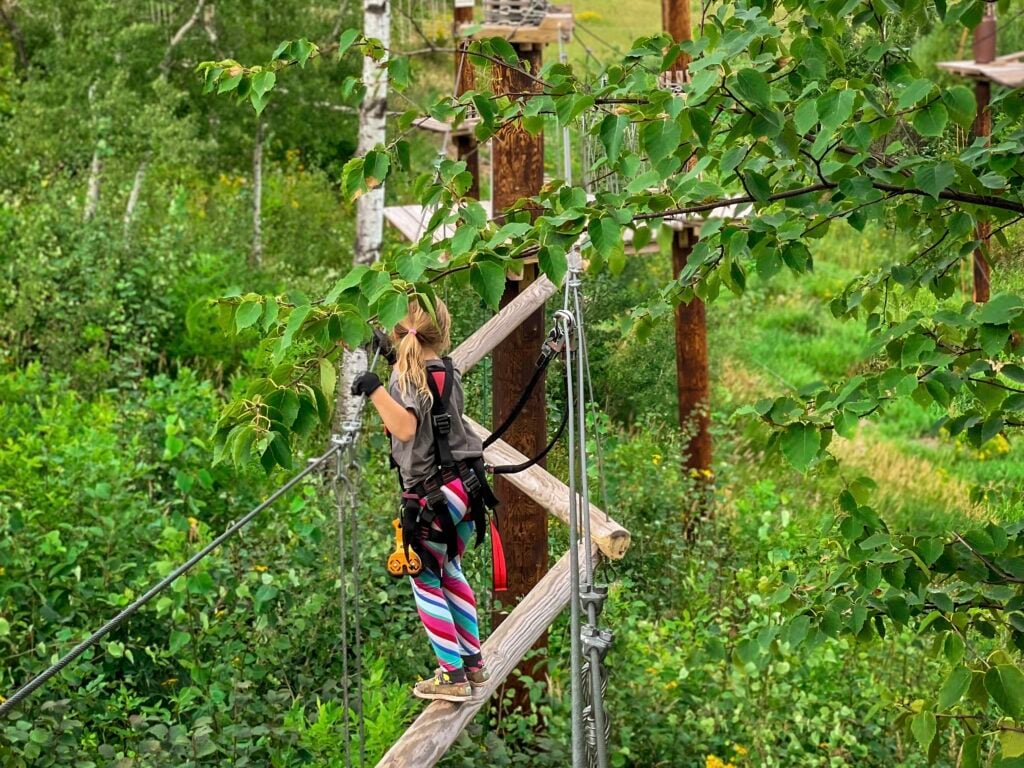
Parents don’t need training in natural resources management to help their kids understand and appreciate nature, though. The best approach, Colbenson says, is the active one: get away from the computer, or off the couch, and take them on an outdoor adventure.
“Instead of talking about it, you take them on a trip to the beach, or camping, or to the zoo,” he says. “Our ecosystem is everywhere.”
And if you find your own little piece of Jenson’s Woods while you’re out there, keep your eyes open for poisonous snakes.
— Try as she might, Joy Riggs still has trouble appreciating the mosquito’s role in our ecosystem.