Rebuilding Your Core After Pregnancy Through a Pilates Postnatal Core Workout
Your body has just done something incredible—grown and delivered a tiny human. Congratulations mama! But now, as you start thinking about your recovery, you may notice that your core feels weak, disconnected, or even like there’s a gap in the middle of your abdomen. This is known as diastasis recti, a common condition where the abdominal muscles separate during pregnancy to make room for your growing baby.
If you’ve ever felt like your stomach isn’t “bouncing back“ (which I don’t even like to use this phrase, but it is commonly referenced) or that you struggle to engage your core no matter how hard you try, you’re not alone. The good news is that your body is resilient, and with the proper breathing techniques and postnatal core workout, you can safely rebuild your core and heal diastasis recti.
I’m not a doctor, and every postpartum recovery journey is unique. If your abdominal separation is greater than three fingers wide or you’re experiencing pain, incontinence, or pelvic discomfort, I highly recommend seeking out a pelvic floor physical therapist for personalized guidance and support.
Pilates is one of the most effective ways to strengthen your deep core, support your postpartum recovery, and regain confidence in your body. In this guide, we’ll cover what diastasis recti is, how to check for it yourself, which postnatal core exercises help heal it, and what movements to avoid as you begin your recovery journey.
What is Diastasis Recti and Why Does It Happen?
During pregnancy, your abdominal muscles stretch to accommodate your growing baby. This stretching can cause the connective tissue (the linea alba) between your rectus abdominis muscles to weaken and separate. In many cases, this gap remains postpartum, leaving the core feeling unstable and making everyday movements—like getting out of bed or lifting your baby—more challenging.
Some of the most common signs of diastasis recti include:
- A visible gap or bulge down the midline of your abdomen
- A feeling of weakness or instability in your core
- Lower back pain due to a lack of deep core support
- Difficulty engaging your core, even during simple movements
If this sounds familiar, don’t worry—healing is possible. The first step is determining whether you have diastasis recti through a simple self-assessment.
How to Do a Self-Diastasis Recti Assessment
Checking for diastasis recti at home is simple and only takes a few minutes.
- Get into position – Lie on your back with your knees bent and feet flat on the floor. Place one hand behind your head for support.
- Perform a small crunch – Take a deep breath in. As you exhale, lift your head slightly off the ground while keeping your shoulders down. Use your other hand to feel along the midline of your abdomen, just above and below the belly button.
- Check for separation – Press your fingers gently into your midline. If you feel a gap between the muscles, take note of how many fingers fit between them:
- One to two fingers: Mild diastasis recti, typically heals well with core exercises.
- Three or more fingers: More significant separation that may require additional support, such as working with a pelvic floor physical therapist.
- Repeat for accuracy – Check at three points: just above your belly button, at your belly button, and just below your belly button. If your separation is wider than three fingers or you feel a deep, soft gap, consulting a pelvic floor physical therapist is highly recommended.
Knowing your baseline is important, as it helps track your progress and ensures you’re focusing on safe, practical postnatal core exercises that promote healing.
Note: If you are unsure or can’t tell if you have a separation, you probably do not. It will be very noticeable and feel almost like a hole or indent in the middle of your stomach.

The Best Postnatal Core Exercises to Heal and Strengthen Your Core
When it comes to postnatal core workouts, the key is slow, controlled movements that focus on deep core engagement rather than traditional ab workouts like crunches or sit-ups. Here are some of the most effective Pilates exercises to help heal diastasis recti and rebuild your core strength.
Diaphragmatic Breathing
This is the foundation of healing and strengthening the core. Practicing deep breathing throughout the day will help activate the deep core and pelvic floor muscles.
- Sit or lie down in a comfortable position.
- Place one hand on your belly and one on your ribcage.
- Inhale deeply through your nose, expanding your ribcage outward while keeping your belly relaxed.
- Exhale slowly through your mouth, drawing your belly button gently toward your spine.
- Aim for three rounds of ten intentional breaths throughout the day.
Pelvic Tilts
Strengthens the lower abdominals and pelvic floor without putting pressure on the midline.
- Lie on your back with your knees bent and feet hip-width apart.
- Inhale to relax your pelvis in a neutral position.
- Exhale and gently tilt your pelvis backward, pressing your lower back into the mat.
- Hold for a second, then return to neutral.
- Start with one round of ten reps, working up to two or three rounds as you get stronger.
Heel Slides
Encourages core activation while maintaining control and stability.
- Start in the same position as pelvic tilts.
- Inhale to prepare, exhale, and slowly extend one leg along the mat, keeping your core engaged.
- Inhale to bring it back in and repeat on the other side.
- Begin with one round of ten reps per side, progressing to two or three rounds.
Bent-Knee Marches
Improves core activation and stability.
- Lie on your back with your knees bent.
- Exhale and slowly lift one leg to tabletop, keeping your core engaged.
- Lower it down with control and switch sides.
- Start with one round of ten reps per leg and build up to two or three rounds.
Glute Bridge with Core Activation
Strengthens the glutes and lower back while reinforcing core stability.
- Lie on your back with your knees bent and feet flat on the floor.
- Exhale as you lift your hips, engaging your deep core and glutes.
- Inhale to lower back down with control.
- Begin with one round of ten reps and work up to two or three rounds.
Dead Bug
Trains core stability and control without excessive strain.
- Lie on your back with your knees bent and arms extended toward the ceiling.
- Exhale as you lower one arm and the opposite leg toward the floor, keeping your core engaged.
- Inhale to return to the starting position and switch sides.
- Start with one round of ten reps per side and build to two or three rounds.

What Exercises Should Be Avoided After Pregnancy?
While it might be tempting to jump back into traditional ab workouts, according to Every Mother, “If intra-abdominal pressure increases to unsafe levels, the pressure, as a result, strains the overstretched tissue in the front and center of the abdomen, further separating the rectus abdominis muscles.” Here’s what to avoid in the early postpartum months:
❌ Crunches and sit-ups – These force the ab muscles outward, increasing separation.
❌ Full planks – Can put excessive pressure on the midline.
❌ Double leg lifts – Too much strain on the lower abs.
❌ Russian twists – Twisting can further stretch and weaken the linea alba.
❌ Heavy lifting without proper core engagement – Can make healing more difficult.
Instead, focus on Pilates-based movements that strengthen your core from the inside out before progressing to more challenging exercises.
Related Article: The Best Pelvic Floor Exercises After Pregnancy
How Long Does It Take to Heal Your Core After Pregnancy?
Every woman’s recovery journey is different. Please reference Cleveland Clinic’s Postpartum Recovery Timeline and how it is unique to you. Some moms notice improvement in their core strength within three to six months, while others may take closer to a year to regain complete stability. Personally, it took me about two years postpartum to feel mentally and physically at my best.
Healing time depends on several factors:
- Consistency – Doing a postnatal core workout at least three to four times per week.
- Proper breathing and engagement – Make sure you activate the right muscles.
- Avoiding exercises that delay healing – Skipping crunches and high-impact movements until your core is ready.
- Mental health – Managing stress, sleep, and self-care, as these factors significantly impact physical recovery.

Ready to Rebuild Your Core?
Postpartum recovery is a journey, and Pilates can be a powerful tool for helping you feel strong, supported, and confident in your body again.
With a structured plan that makes healing simple, feel strong, supported, and confident in your body again. The PILATESBODY by Kayla 8-Week Pilatesbody Challenge is a complete step-by-step program for new moms. With fully guided workout videos, you’ll have everything you need to rebuild your core and regain strength—all from the comfort of your home.
About Kayla:
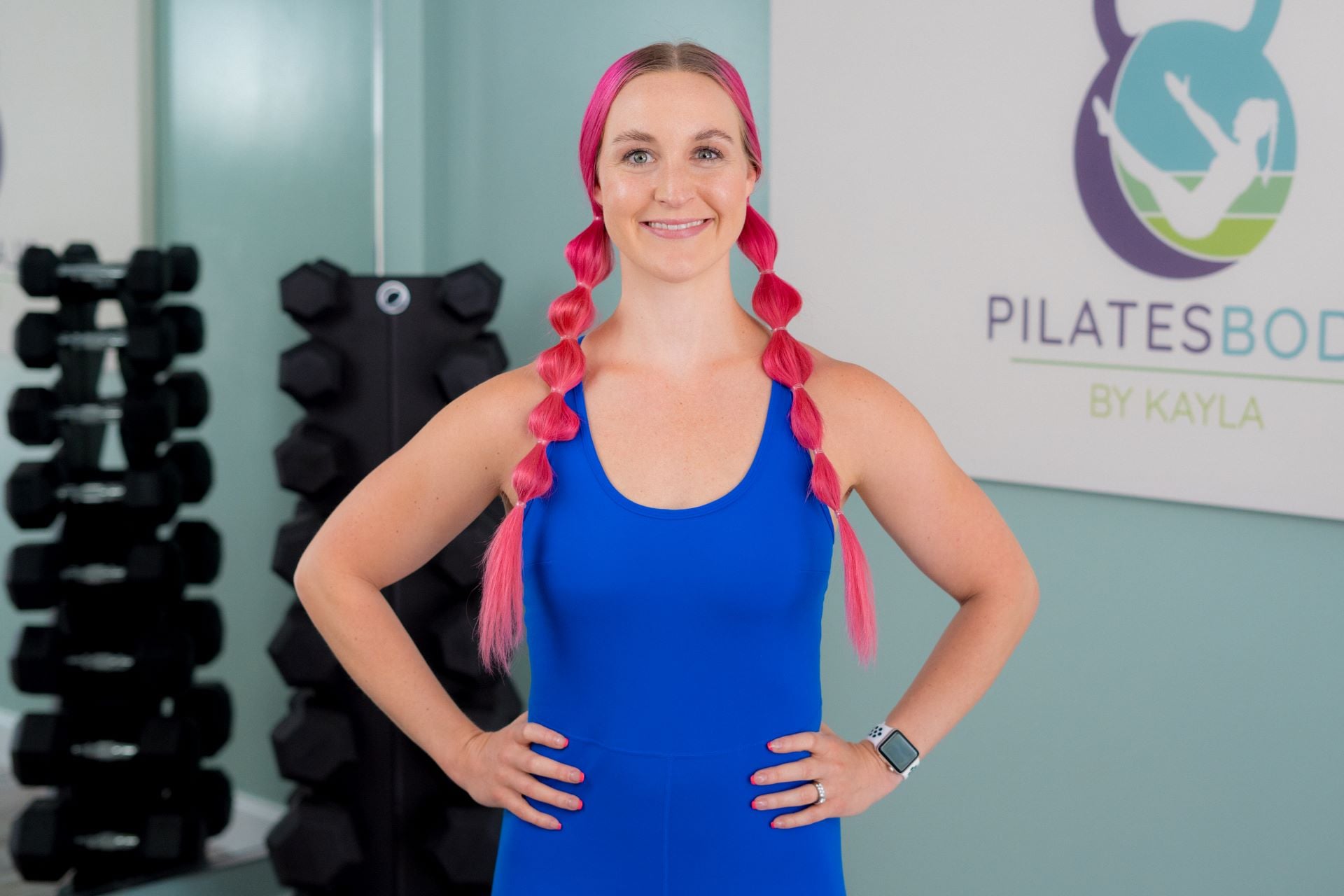
I built PilatesBody by Kayla because I know firsthand the challenges busy moms face. After struggling to find a fitness program that strengthened my core, boosted my confidence, and fit into my hectic life, I created one that does just that—and more.
As certified Pilates and personal trainer, I’m here to help you build lean muscle, reconnect with your core, and feel at home in your body again.
I’m a mom too, and I know how often we put ourselves last. Let me help you get strong, find your confidence, and prioritize you—from the inside out.
Related Article: Pilates for Parents: Get Started with Pilates At Home Exercises